


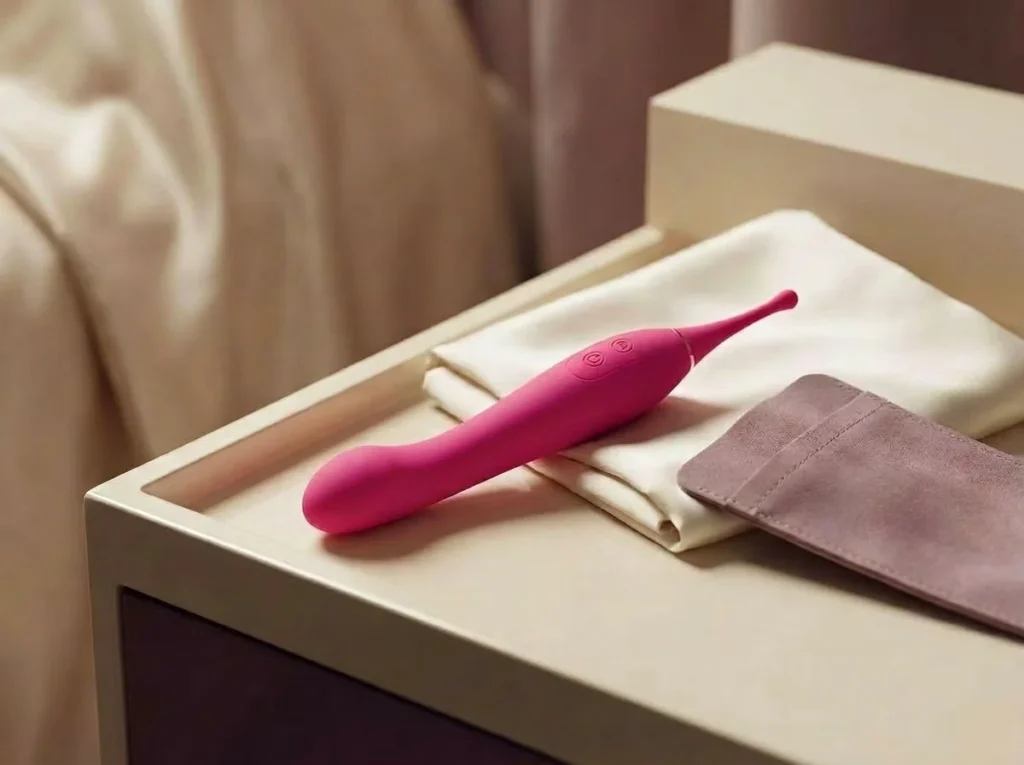
Adults 21+ only. A vibrator self-care routine should not ask you to become louder, braver, more optimized, or more impressive before you are allowed to choose it.
It can be quieter than that. It can be a soft routine you return to because it fits your room, your drawer, your energy, and your actual private time. It can be something you understand without turning your evening into research. It can be one object, one pouch, one charging habit, one clear boundary, and no performance attached.
The broader wellness conversation is already tired of making every personal habit feel like a scoreboard. That is useful only if it changes the way we shop. For Lumisyla, the point is not to turn intimate wellness into another achievement. The point is to make a private choice feel easier to hold.
The 2026 Wellness Shift Is Away From Proving
That shift is showing up beyond intimate wellness. The Global Wellness Summit’s 2026 trend report frames the year around moving past optimization-at-all-costs and toward practices that feel more emotionally restorative, embodied, and repeatable. For Lumisyla, that matters because a private routine should not borrow the harshest parts of wellness culture. It should not make rest feel like a metric, confidence feel like a performance, or pleasure feel like something you have to justify.
A calmer intimate-wellness choice starts with the life around it: how much privacy you need, how simple storage can be, whether a first step feels easy to pause, and whether the object supports your evening instead of taking over the room. If the broader conversation is learning to trust smaller, steadier rituals, a vibrator self-care routine can follow the same rule: choose what helps you return to yourself without turning that return into another assignment.
Self-Care Does Not Need Another Score
Self-care can become strangely demanding. A morning routine needs the right order. A night routine needs the right mood. A product needs to look beautiful enough, sound quiet enough, store neatly enough, and somehow make you feel like the kind of person who has everything handled.
That is too much to ask from a private routine.
If intimate wellness is going to belong inside self-care, it has to remove pressure instead of adding it. It should not make you prove confidence. It should not make you perform empowerment for anyone else. It should not turn a quiet choice into a personality test.
Start with a smaller standard: does this choice make it easier to feel at home with yourself when nobody is watching?
That is the argument behind Lumisyla’s private self-care routine approach. The routine is not there to impress you. It is there to give a little space back.
What A Low-Pressure Routine Actually Protects
A low-pressure self-care routine protects the part of you that does not want to explain everything.
It protects privacy in a shared home. It protects the right to start slowly. It protects the option to close the drawer and come back later. It protects your ability to say, “not tonight,” without turning that into failure.
That matters because the first barrier is often not the product category. It is the emotional friction around the product. The tab you keep open. The package question. The sound question. The worry that you are choosing too much or not enough. The feeling that a private purchase has to announce a whole new version of you.
It does not.
If you are choosing your first intimate-wellness piece, the better filter is not “what is the most advanced option?” It is closer to the question in Lumisyla’s low-maintenance first vibrator guide: which choice makes your private life simpler, not louder?
Start With The Moment, Not The Product
A product-first routine often sounds practical, but it can become overwhelming quickly. Shape, settings, size, charging, materials, care, storage, sound, shipping, and returns all arrive at once.
A moment-first routine is calmer. Ask what kind of private moment you are actually protecting.
- A quiet evening after everyone else is asleep.
- A small apartment where storage matters.
- A first purchase that should not feel dramatic.
- A solo date at home that belongs to you.
- A shared-home routine where sound and charging need to stay simple.
Once the moment is clear, the product decision gets less theatrical. You are no longer asking which option proves something. You are asking which option fits the life you already have.
If this is your first purchase, start with a private first-choice framework before comparing product pages. If you already know privacy is the real constraint, use the first quiet pick routine chooser to narrow the path.
Choose For Privacy Before Features
Features matter. But they matter after the routine has room to exist.
A long feature list cannot fix a product that feels too stressful to keep, charge, clean, or store. A dramatic product page cannot replace the basic relief of knowing where something will go when you are done with it. A beautiful object still has to live in a real drawer.
For a low-pressure vibrator self-care routine, privacy is not only about sound. It includes packaging, checkout, the way the product looks in a room, how obvious the charger feels, how easy it is to store, and whether the page gives you enough information before purchase.
That is why “quiet” and “discreet” are not the same decision. If you are choosing between the two, read Quiet vs Discreet first. Then move into Quiet Picks if shared-home privacy is the main thing you want to protect.
Make Storage Part Of The Routine
Storage is not an afterthought. It is part of whether the routine survives.
If the product has nowhere calm to live, every return to it has a little friction. You notice the charger. You move it twice. You wonder whether the pouch is enough. You put it somewhere inconvenient, then forget the routine was supposed to feel easy.
A better routine has a home before it has a mood. One pouch. One clean dry place. One charging habit if charging applies. One rule for what gets kept together. Nothing elaborate.
For small spaces, the question is not whether you can hide everything perfectly. It is whether the routine can stay private without becoming another thing to manage. Lumisyla’s Travel & Small Spaces path is useful when storage, charging, and discreet packing are part of the decision.
Let Product Fit Serve The Mood, Not Interrupt It
The product should support the mood you want, not interrupt it with uncertainty.
If you want a softer first step, First Steps is the calmer category to start with. If you want something focused and easy to understand, a product like LUMI Heart may help you compare size, controls, storage, and shared-pacing questions without jumping straight into a larger decision. If you are curious about a curved format but still want a beginner-aware page, LUMI Soft Pulse is a better product page to read slowly, with the PDP as the source of truth for current details.
Notice the order. The product is not the identity. It is the support. The question is not “what does this say about me?” The question is “will this make my private routine easier to return to?”
That is a quieter kind of confidence. It does not need to be posted, explained, or turned into a lifestyle.
The Pre-Cart Pause
Before checkout, pause for the ordinary questions. They are not small. They are the routine.
- Do I understand where this will live?
- Do I know how it charges, dries, and stores?
- Does the lowest setting or softest path sound right for the way I want to begin?
- Have I checked delivery, packaging, and return details?
- Does this choice make me feel more at home with myself, or more pressured?
If the answer is pressure, wait. That is not a lack of confidence. That is a boundary doing its job.
If the answer is calm, keep the routine simple. Read the product page. Read Shipping & Returns if eligibility matters. Choose the product that fits the room, the drawer, the energy, and the version of yourself that does not need to prove anything.
FAQ
Can a vibrator be part of a self-care routine?
For adults 21+, yes. It can be part of private self-care when it is chosen with privacy, storage, easy care, and emotional comfort in mind. It does not need to become a public statement or a complicated routine.
What makes the routine low pressure?
Low pressure means the product is easy to understand, easy to keep private, easy to store, and easy to pause. It also means the choice does not depend on proving confidence, intensity, or a new identity.
Should I start with a product or a category?
Start with the routine. If you want a softer first step, start with First Steps. If sound and shared-home privacy matter most, start with Quiet Picks. Then use product pages for the final details.
What should I check before buying?
Check size, controls, charging, care, storage, packaging, and return eligibility. Also check whether the choice feels calm enough to return to. A private routine should feel usable, not like another thing to manage.