How to Clean and Store a Vibrator Without Turning It Into Another Task
Adults 21+: clean and store a vibrator with a simple private routine that respects care, privacy, charging, drying, and calm storage without turning it into another task.
Adults 21+ only. Cleaning and storing a vibrator should not feel like a confession, a science project, or one more private thing you have to manage perfectly.
The better routine is smaller than that. You clean what needs cleaning. You let it dry. You keep the charger, pouch, and product in one calm place. You check the product page or care insert when a material, battery, or water-resistance detail is specific. Then you close the drawer and let the choice stay ordinary.
That is the thesis: vibrator care is not about making intimate wellness more serious. It is about removing friction so a private routine can be easy to return to.
Start With The Care Label, Not The Sink
The most common mistake is treating every product like it can be handled the same way. It cannot. A simple external silicone piece, a curved rechargeable product, a product with a charging port, and a product with separate removable parts may all need slightly different care.
External guides such as Healthline’s overview on cleaning sex toys and Bedsider’s sex-toy cleaning guide point readers toward the same practical idea: material, motor, and manufacturer guidance matter. For Lumisyla, the softer version of that rule is this: do not let a sink routine replace product-specific instructions.
If a product page says something specific about care, charging, water resistance, removable parts, or drying, that page is the source of truth. If the page does not answer your question, treat the product gently and ask before assuming it can be soaked, scrubbed, boiled, or cleaned with harsh products.
Lumisyla already frames this through The Sink Is Not a Water Rating. Water-friendly language and actual water-resistance limits are not the same thing. Cleaning is easier when the product is respected as a designed object, not treated like every other item on the counter.
A Calm Cleaning Routine Can Be Very Short
A care routine does not need a tray of supplies. For many nonporous external products, the everyday logic is simple: clean the surface according to the product’s instructions, avoid aggressive cleaners unless they are explicitly approved, rinse or wipe as appropriate, and let everything dry fully before storage.
The important part is not making the routine elaborate. The important part is making it repeatable. A product that takes too much work to clean, charge, dry, or put away can quietly become a product you avoid. Then the problem is not confidence. It is friction.
Try a small sequence that you can actually remember:
- Check whether the product should be wiped, rinsed, or kept away from soaking.
- Clean before storage, especially if it has been handled.
- Let the surface dry before it goes into a pouch, drawer, or travel case.
- Keep the charger away from damp surfaces.
- Store it somewhere private, clean, and easy to return to.
That is enough for the emotional point of the routine. It says: this belongs in my life, and it does not need to take over my evening.
Drying Is Part Of Privacy
People often think of privacy as packaging, sound, or a discreet drawer. Drying belongs in the same conversation.
If a product is rushed back into storage while still damp, the routine starts to feel messy. If it has to sit somewhere visible for too long, privacy feels less protected. If the charger gets mixed into the same damp place, the whole setup becomes annoying instead of calm.
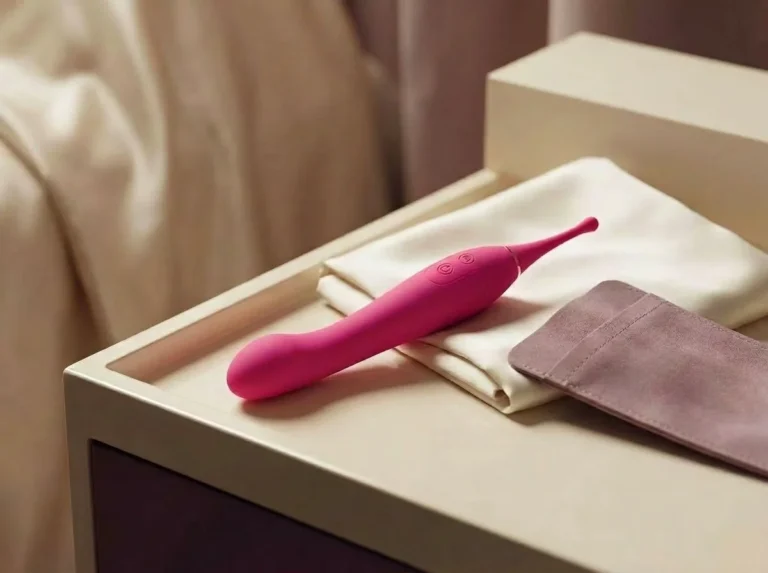
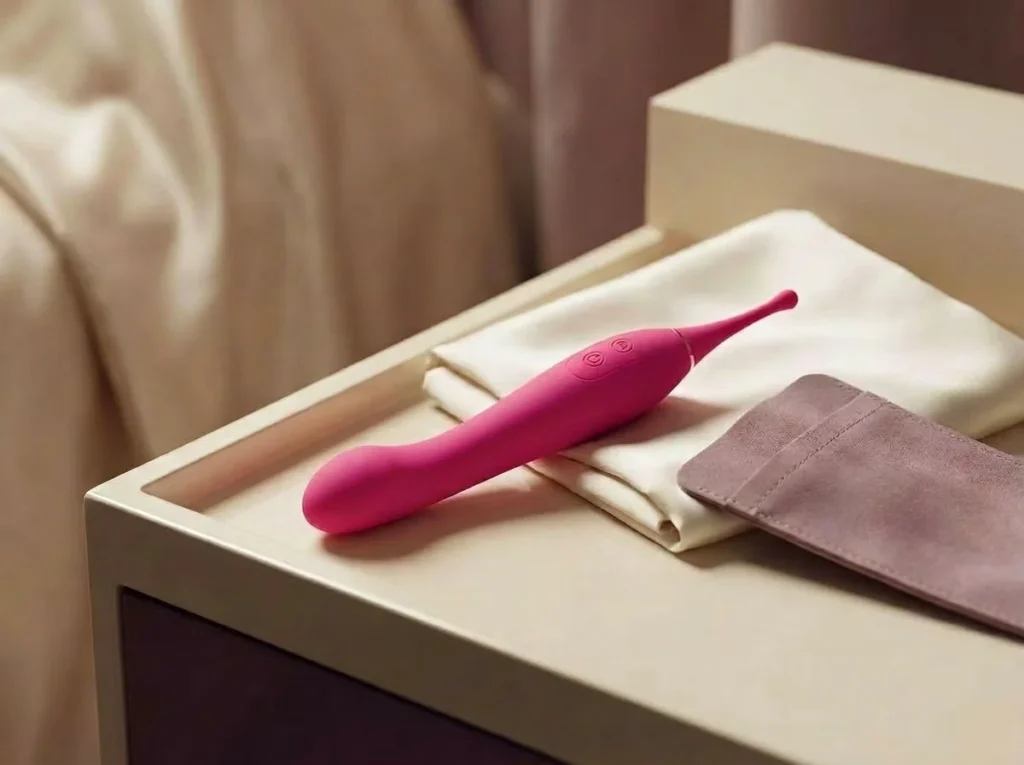
The solution is not complicated. Give drying a quiet place in the routine. A clean towel, a private shelf, or a short pause before pouching can make the difference between care that feels manageable and care that feels like clutter.
This is also where small-space storage matters. In a shared home, studio apartment, dorm-style room, or travel setup, a routine that needs too much visible counter space may not survive. Build the care plan around the room you actually have.
Keep Charging From Becoming The Weird Part
Charging is where many private routines lose their softness. A product feels easy until the cable is missing, the charger looks too obvious, or the product has to sit out longer than you want.
Do not make charging a separate mystery. Keep the charger with the product or in one known nearby place. Charge only in a dry setup. Avoid stuffing a damp product and charging cable together. If the charger has a specific connector, keep it labeled or stored in the same pouch so the routine does not become a search mission.
Lumisyla’s older Journal piece When the Charger Makes It Weird names the emotional problem clearly: the accessory can make the product feel less private than the product itself. A good care routine includes the charger because the charger is part of the real ownership experience.
If you are still choosing your first product, this is a useful filter. Before comparing every feature, ask whether the charging, cleaning, and storage pattern makes sense for your actual room. The low-maintenance first vibrator guide is a calmer place to start if you want fewer moving parts.
Storage Should Make Returning Easier
Storage is not hiding. Storage is how the routine stays available without becoming visual noise.
A good storage setup has three jobs. It keeps the product clean enough to feel easy to pick up again. It keeps privacy intact. It keeps the product, pouch, charger, and any care note from scattering across the room.
That can look like a soft pouch in a drawer, a small private box, a travel case, or a dedicated shelf space that does not invite questions. It does not need to look like a lifestyle photo. It only needs to work on an ordinary night.
If shared-home privacy is the main concern, start with Quiet Picks. If compact packing or drawer space is the real constraint, the Travel & Small Spaces category gives you a more practical comparison frame. The point is not to choose the smallest object automatically. The point is to choose the object whose care pattern you can actually live with.
Do Not Let Care Become A Confidence Test
There is a strange pressure around intimate-wellness products: once you buy one, you are supposed to become instantly confident about every part of owning it. Choosing it. Cleaning it. Charging it. Storing it. Talking about it. Not talking about it.
You do not have to be that polished.
Care can be private and still be thoughtful. You can read instructions slowly. You can pick the simpler product. You can choose a pouch before a product. You can decide that a product is not right for your current room because it would make storage stressful. None of that is a failure. It is the routine telling the truth.
That same emotional standard runs through Lumisyla’s private self-care routine approach. The product is not the proof. The way it fits into your life is the point.
A Simple Pre-Storage Checklist
Before putting a product away, use questions that are ordinary enough to repeat:
- Did I follow the care guidance for this specific product?
- Is the surface clean and fully dry before storage?
- Is the charger dry, separate, and easy to find?
- Is the pouch or case clean enough that I will want to use it again?
- Is the product stored somewhere private without being hard to reach?
- Do I know where to check product details if I am unsure?
That checklist is not meant to make you careful in a fearful way. It is meant to make the next return easier.
Where Product Choice Fits In
Product guidance should support the care routine, not interrupt it.
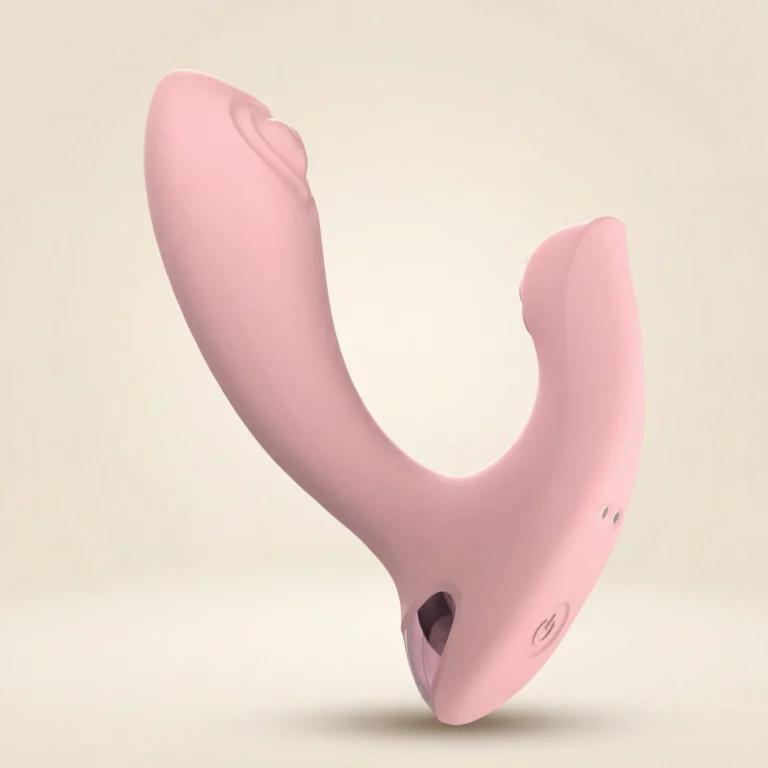
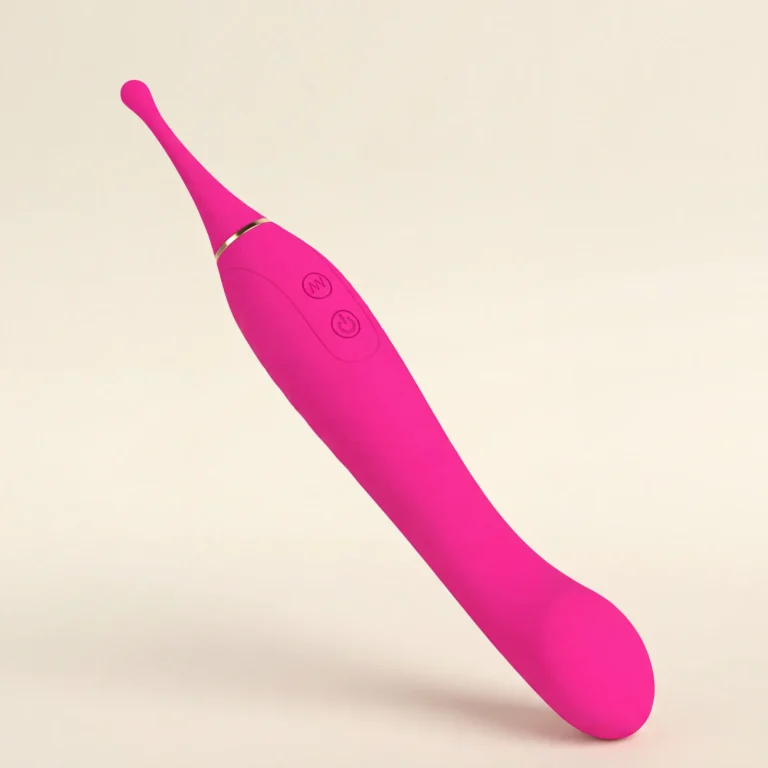
If this is your first step, First Steps is the gentlest place to compare. If you want a small, focused product whose page is easy to understand, LUMI Heart is a useful PDP to read for size, care, storage, and control details. If you are considering a curved format and want to think through fit before features, LUMI Soft Pulse gives you a more focused product page to evaluate slowly.
Read the PDP before you decide. Product availability, materials, charging details, care notes, and current specs belong there. The Journal can help you ask better questions, but the product page should carry the product truth.
The Quiet Ending
A good care routine ends quietly. The product is clean. The surface is dry. The charger has a place. The pouch is not lost. The drawer closes. Nothing about the routine asks you to explain yourself.
That is the kind of care Lumisyla is interested in: practical enough to repeat, private enough to feel safe, and gentle enough that it does not turn personal choice into another performance.
FAQ
How often should I clean a vibrator?
For adults 21+, clean it according to the product’s care guidance before storing it and whenever it has been handled in a way that makes cleaning appropriate. Keep the routine simple, but do not skip the product-specific instructions.
Can I wash every vibrator under running water?
No. Water resistance, charging ports, seams, and motor design vary. Check the product page or care insert first. If you are unsure, avoid soaking and treat the product gently until you have confirmed the right care path.
What is the best way to store a vibrator privately?
Use a clean, dry pouch, case, drawer, or private box that keeps the product easy to return to without making it visually exposed. Keep chargers and care notes nearby so the routine stays low-maintenance.
Should I choose a product based on cleaning and storage?
Yes, especially for a first purchase or shared-home routine. A product that fits your privacy, drying, charging, and storage reality is usually easier to return to than one chosen only for a long feature list.