Tag: Research & Papers
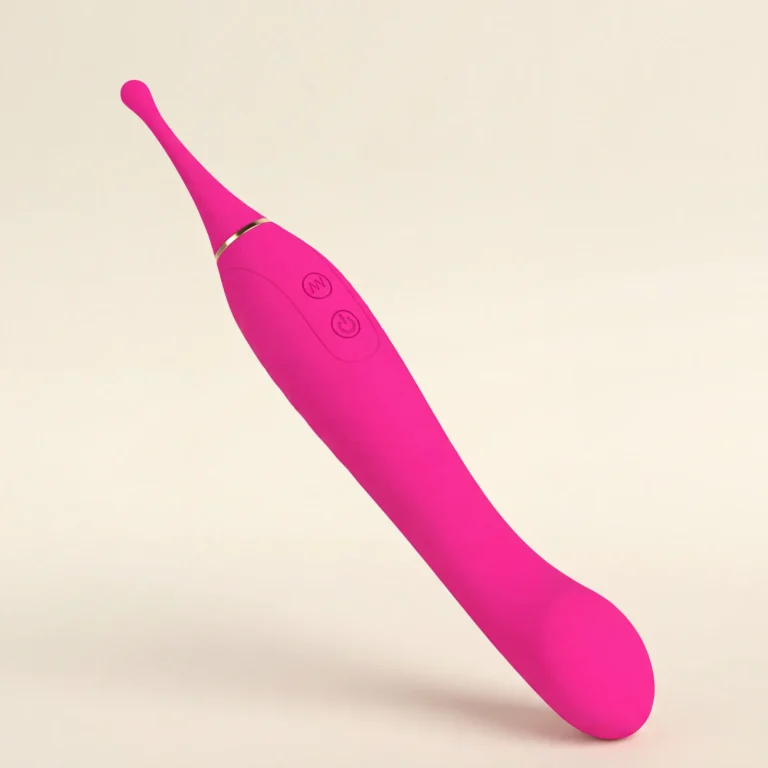
A good photo can make you breathe differently.
The color is calm. The shape looks less intimidating. The page does not feel like the kind of place you would close the moment someone walks by.
That matters.
It just cannot do the whole job.
Before something touches your body, the pretty part needs a quiet backup: what the surface is made of, whether the wording is supported, how it is cleaned, what parts stay dry, and what kind of lubricant usually makes sense for the material.
No one wants a product page to feel like a lab report. We do not either.
But there is a difference between softness and vagueness.
Softness says: stay as long as you need.
Vagueness says: trust us, somehow.
That is not enough for anything that touches the body. Beauty can make the first look easier. The facts are what let you keep going.
FAQ
What details matter before skin contact?
Body-contact material, other components, cleaning, drying, storage, water rating, lubricant fit, and what parts must stay dry.
Why not rely on strong material labels alone?
Stronger labels need documentation. Supported material wording is safer than a claim the page cannot prove.
Article Sources
- Wood, J., et al. A cross-sectional survey of sex toy use, hygiene behaviours, and vulvovaginal health outcomes in Canada. The Canadian Journal of Human Sexuality, 2017. DOI: 10.3138/cjhs.2017-0016.
- Anderson, T. A., et al. A study of human papillomavirus on vaginally inserted sex toys, before and after cleaning. Sexually Transmitted Infections, 2014. DOI: 10.1136/sextrans-2014-051558.
- Dezzutti, C. S., et al. Is Wetter Better? An Evaluation of Over-the-Counter Personal Lubricants for Safety and Anti-HIV-1 Activity. PLOS ONE, 2012. DOI: 10.1371/journal.pone.0048328.
- American College of Obstetricians and Gynecologists. Your Sexual Health. Accessed June 11, 2026.
About This Note
Product detail note: when this article mentions packaging, materials, cleaning, water ratings, returns, billing, privacy, or policy boundaries, wording is checked against Lumisyla published policy pages or available product data where possible. Research sources explain context; they do not promise product results.
21+ and Health Boundary
Lumisyla is intended for adults 21 and older. This article is educational content, not medical advice. Lumisyla products are adult personal wellness or novelty items unless explicitly stated. They are not intended to diagnose, treat, cure, or prevent any disease or medical condition, and they do not guarantee pleasure, relaxation, stress relief, pain relief, sexual function, or any specific result. If a question involves pain, bleeding, infection symptoms, pregnancy, postpartum concerns, pelvic-floor symptoms, a diagnosis, or persistent stress or anxiety, speak with a qualified clinician.
You closed the tab.
Then it came back while you were brushing your teeth.
Not loudly. Not like a decision. More like a small question tapping from another room.
That happens.
A private question can arrive as a search you erase, a product you save, a FAQ you almost finish, a support message you type and delete. Sometimes closing the page is not avoidance. It is how you make enough space to come back.
There is no need to become a different person before you understand what you want.
You can just return to one small question.
What touches my body?
Can I start low?
How do I clean it?
Will the box be plain?
Can I stop if it feels wrong?
Do I need a clinician instead of shopping advice?
That is quiet intimate literacy at its most useful. Not a big declaration. Not a personality shift. Just enough information and privacy to stay with the question without feeling chased by it.
You closed the tab.
It can wait.
FAQ
What is quiet intimate literacy?
It is having enough information, privacy, and room to read, compare, ask, pause, and choose without pressure.
When is a product page not enough?
When the question involves pain, bleeding, infection symptoms, pregnancy, postpartum concerns, pelvic-floor symptoms, a diagnosis, or persistent stress or anxiety.
Article Sources
- World Health Organization. Sexual health overview. Accessed June 11, 2026.
- Kingsberg, S. A., et al. Female Sexual Health: Barriers to Optimal Outcomes and a Roadmap for Improved Patient-Clinician Communications. Journal of Women's Health, 2019. DOI: 10.1089/jwh.2018.7352.
- American College of Obstetricians and Gynecologists. Your Sexual Health. Accessed June 11, 2026.
- Ford, J. V., et al. The World Association for Sexual Health's Declaration on Sexual Pleasure: A Technical Guide. International Journal of Sexual Health, 2021. DOI: 10.1080/19317611.2021.2023718.
About This Note
Product detail note: when this article mentions packaging, materials, cleaning, water ratings, returns, billing, privacy, or policy boundaries, wording is checked against Lumisyla published policy pages or available product data where possible. Research sources explain context; they do not promise product results.
21+ and Health Boundary
Lumisyla is intended for adults 21 and older. This article is educational content, not medical advice. Lumisyla products are adult personal wellness or novelty items unless explicitly stated. They are not intended to diagnose, treat, cure, or prevent any disease or medical condition, and they do not guarantee pleasure, relaxation, stress relief, pain relief, sexual function, or any specific result. If a question involves pain, bleeding, infection symptoms, pregnancy, postpartum concerns, pelvic-floor symptoms, a diagnosis, or persistent stress or anxiety, speak with a qualified clinician.